
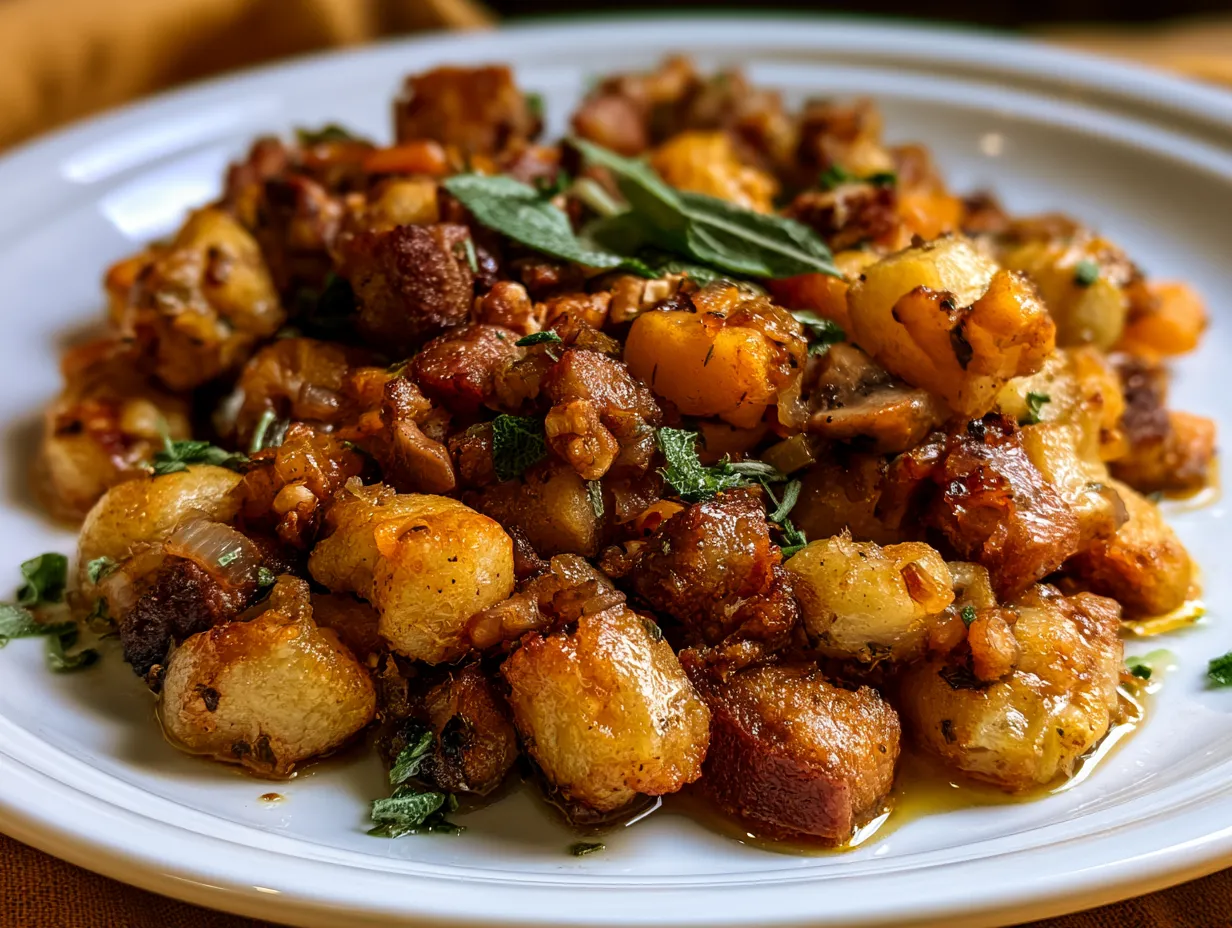
Sage stuffing is a cornerstone of traditional holiday meals, bringing comforting warmth and a distinctive earthy aroma to the table. This recipe captures the classic character of a traditional sage bread stuffing, balancing the herb’s piney, slightly peppery notes with buttery texture and aromatic onions. Preparing sage stuffing with house-baked or day-old bread helps absorb the flavors fully, resulting in a moist, tender side dish that complements roasted poultry beautifully. Making it from scratch means you control seasoning and consistency, ensuring family-friendly comfort food everyone can enjoy.
What You’ll Need
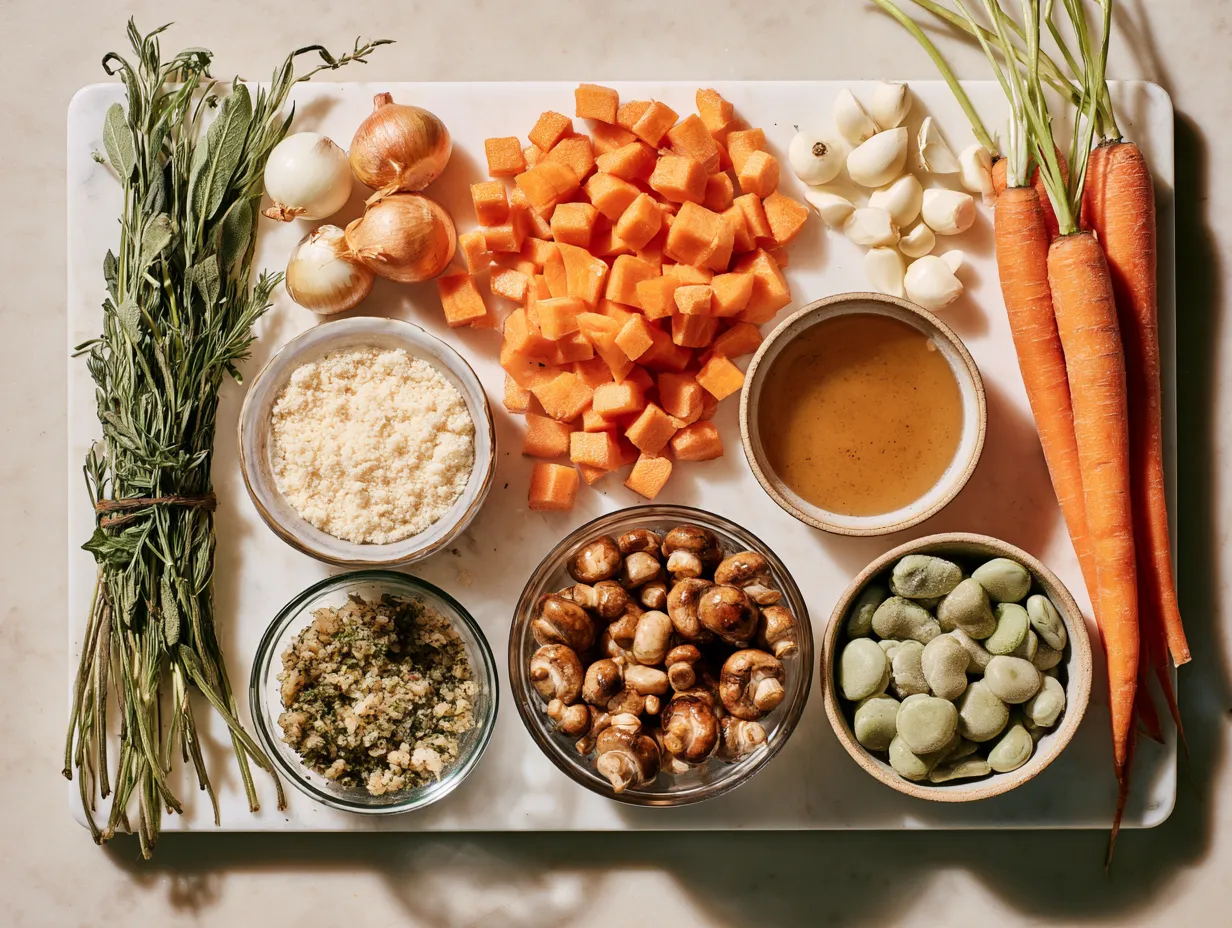
- 10 cups of cubed day-old bread (preferably white or a mix of white and whole wheat)
- 1 cup finely chopped yellow onion
- 1 cup finely chopped celery
- 6 tablespoons unsalted butter
- 2 ½ teaspoons dried sage (or 2 tablespoons fresh sage, finely chopped)
- 1 teaspoon dried thyme
- 1 teaspoon salt
- ½ teaspoon freshly ground black pepper
- 1 ½ to 2 cups chicken or vegetable broth
- 2 large eggs, lightly beaten
Using day-old bread helps the cubes hold their shape and soak up the broth without turning mushy. Butter creates a rich base, while onions and celery add a mild sweetness and subtle crunch. Sage is the star herb, best added dried or fresh depending on availability, with thyme supporting its flavor depth. Broth makes the stuffing moist but be careful not to add it all at once—gradual pouring allows you to control texture.
Bringing It Together
- Preheat your oven to 350°F (175°C). Prepare a 9×13 inch baking dish by lightly greasing it.
- Spread bread cubes on a baking sheet and toast for 10-12 minutes, until slightly crisp but not browned.
- Melt butter in a large skillet over medium heat. Add onions and celery, cooking until softened and translucent, about 8 minutes.
- Stir in sage, thyme, salt, and pepper, cooking for another minute to release their fragrance.
- In a large bowl, combine toasted bread cubes and the sautéed vegetable mixture. Mix gently.
- Beat eggs and add to the mixture along with 1 ½ cups of broth. Toss gently—add more broth if the stuffing seems dry; it should be moist but not soggy.
- Transfer the stuffing to the prepared baking dish, spreading evenly.
- Cover with foil and bake for 30 minutes. Remove foil and bake another 15 minutes to develop a golden top.
Keeping an eye on the moisture balance is essential for moist sage stuffing. Avoid over-soaking to prevent sogginess and ensure tender bites with a slightly crisp top.
Serving It Up
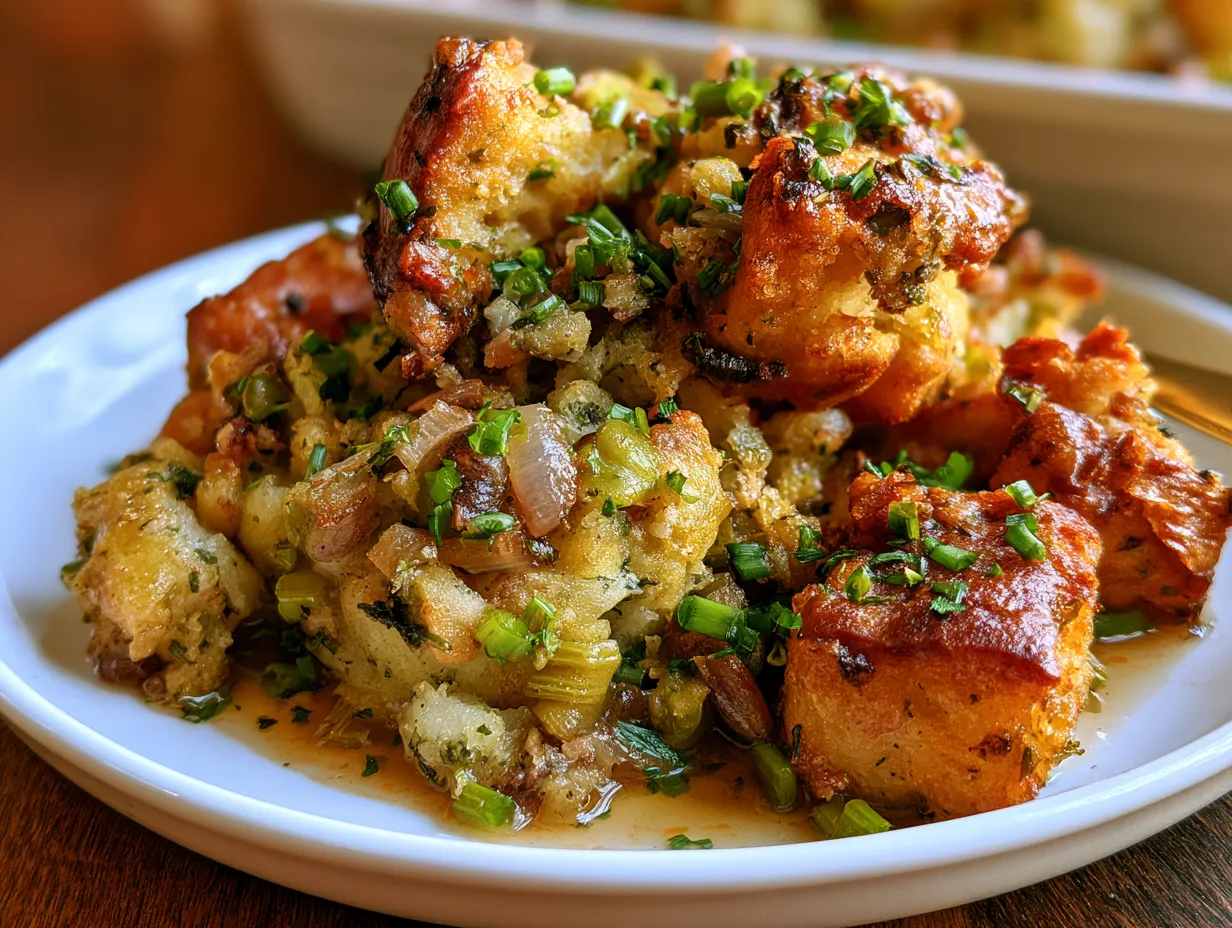
Sage stuffing is a versatile side, perfect beside traditional roast turkey or chicken. It pairs well with cranberry sauce, gravy, and roasted vegetables, rounding out holiday or Sunday dinners. For a heartier presentation, serve it molded in a small buttered casserole or in individual ramekins. Garnish with a few fresh sage leaves for a touch of color and herbaceous aroma at the table. Leftovers reheat beautifully, either warmed gently in the oven or crisped in a skillet.
Good to Know
Can I make this stuffing ahead of time?
Yes, prepare the stuffing completely, cover tightly, and refrigerate for up to 24 hours before baking. Add a bit of extra broth if it dries out in the fridge and reheat covered.What if I don’t have fresh sage?
Dried sage works well, but use about half the amount since it is more concentrated. If only fresh sage is available, chop it finely and adjust quantity accordingly.Can I freeze leftover sage stuffing?
You can freeze cooked stuffing for up to 3 months in an airtight container. Defrost overnight in the refrigerator and reheat in the oven, covered.How do I know if the stuffing is cooked through?
The internal temperature should reach about 165°F (74°C), and the top should be golden brown and slightly crisp.Can I add sausage or nuts?
Yes, cooked sausage or toasted nuts add texture and flavor; just incorporate after sautéing the onions and celery. For inspiration, check out our sausage southern cornbread stuffing or the sausage maple waffle bake. Chicken sausage lovers might enjoy the chicken sausage broccoli and orzo skillet as well.
A Final Note
Sage stuffing is a dependable, savory side that embraces traditional flavors while allowing room for personal adaptations. Mastering the right moisture level and seasoning balance results in a moist sage stuffing perfect for family gatherings. Try fresh herbs when available and don’t hesitate to integrate your favorite additions for a comforting, home-cooked essential. For more classic tips, see the classic sage dressing, or explore variations like the sausage and sage stuffing and the traditional sage stuffing.
Sage Stuffing

A comforting and aromatic sage stuffing made with rustic bread cubes, fresh herbs, and savory vegetables, perfect for holiday meals or cozy dinners.
- Prep Time: 15 minutes
- Cook Time: 40 minutes
- Total Time: 55 minutes
- Yield: 8 servings
- Category: Dinner
- Method: Baked
- Cuisine: American
Ingredients
- 8 cups cubed rustic bread (preferably slightly stale)
- 4 tablespoons unsalted butter
- 1 medium yellow onion, finely chopped
- 3 celery stalks, diced
- 3 cloves garlic, minced
- 2 teaspoons fresh sage, finely chopped (or 1 teaspoon dried sage)
- 1 teaspoon fresh thyme leaves
- 1/2 teaspoon dried rosemary, crushed
- 1/2 teaspoon salt
- 1/4 teaspoon black pepper
- 1 1/2 cups low-sodium chicken broth (or vegetable broth)
- 1 large egg, beaten
Instructions
- Preheat the oven to 350°F (175°C). Lightly grease a 9×13 inch baking dish.
- Melt the butter in a large skillet over medium heat. Add the onion and celery, cooking until softened, about 5–7 minutes.
- Add the garlic, sage, thyme, and rosemary, cooking for an additional 1–2 minutes until fragrant.
- Place the bread cubes in a large mixing bowl. Pour the sautéed vegetable and herb mixture over the bread.
- In a separate bowl, whisk together the chicken broth and beaten egg. Pour this mixture over the bread and vegetables, tossing gently to combine. The bread should be moist but not soggy.
- Season with salt and pepper, then transfer to the prepared baking dish and spread evenly.
- Bake in the preheated oven for 35–40 minutes, until the top is golden and crisp.
- Remove from oven and let stand for 5 minutes before serving.
Notes
For a richer flavor, you can add 1/2 cup cooked and crumbled sausage or toasted chopped nuts for texture. Leftovers can be reheated covered with foil to retain moisture.