

There’s something so comforting about a warm bowl of Japanese Onion Soup, isn’t there? I still remember the first time I stumbled upon this cozy dish. It was a chilly evening, and I needed something soothing after a hectic day juggling the kids’ schedules and dinner prep. The aroma of sweet, caramelized onions sizzling in a pot with a gentle, umami-rich dashi broth instantly reminded me of those peaceful moments I crave in the chaos of family life. Japanese Onion Soup quickly became one of my go-to dishes — and soon after, a family favorite we all looked forward to.
The journey to perfecting my version of Japanese Onion Soup wasn’t without a few hiccups. At first, I undercooked the onions, missing out on that lovely caramelized sweetness which is key to this Japanese caramelized onion soup experience. I’ve come to realize that patience is truly a virtue with this recipe — letting the onions slowly soften and brown transforms the whole dish from just a simple broth into something magical. It’s also a lifesaver on those busy nights when I want a healthy, hearty meal that doesn’t require a full sit-down dinner but still feels special enough for us all to enjoy.
This Japanese Onion Soup fits so well into a family’s rhythm—whether for a quick lunch, a comforting dinner, or as that perfect starter when friends come over. It combines simplicity with deep flavor, thanks to ingredients like dashi broth, that delicate stock which I learned about from a fellow home cook online (if you want to peek at what true Japanese dashi broth onion soup looks like in the wild). And the addition of spring onions really brightens the dish with a fresh hint of sharpness, making Japanese soup with spring onions one of the little twists that surprises my family every time.
By the way, if you’re new to a miso onion soup recipe or curious about how to make a sweet onion soup Japanese style, stick with me — I’m sharing every little tip, including some secret shortcuts and stories from my kitchen struggles. Let’s dive into this together. Trust me, by the end, you’ll want to keep this Japanese Onion Soup recipe in your personal cookbook just as much as I do.
Ingredients:
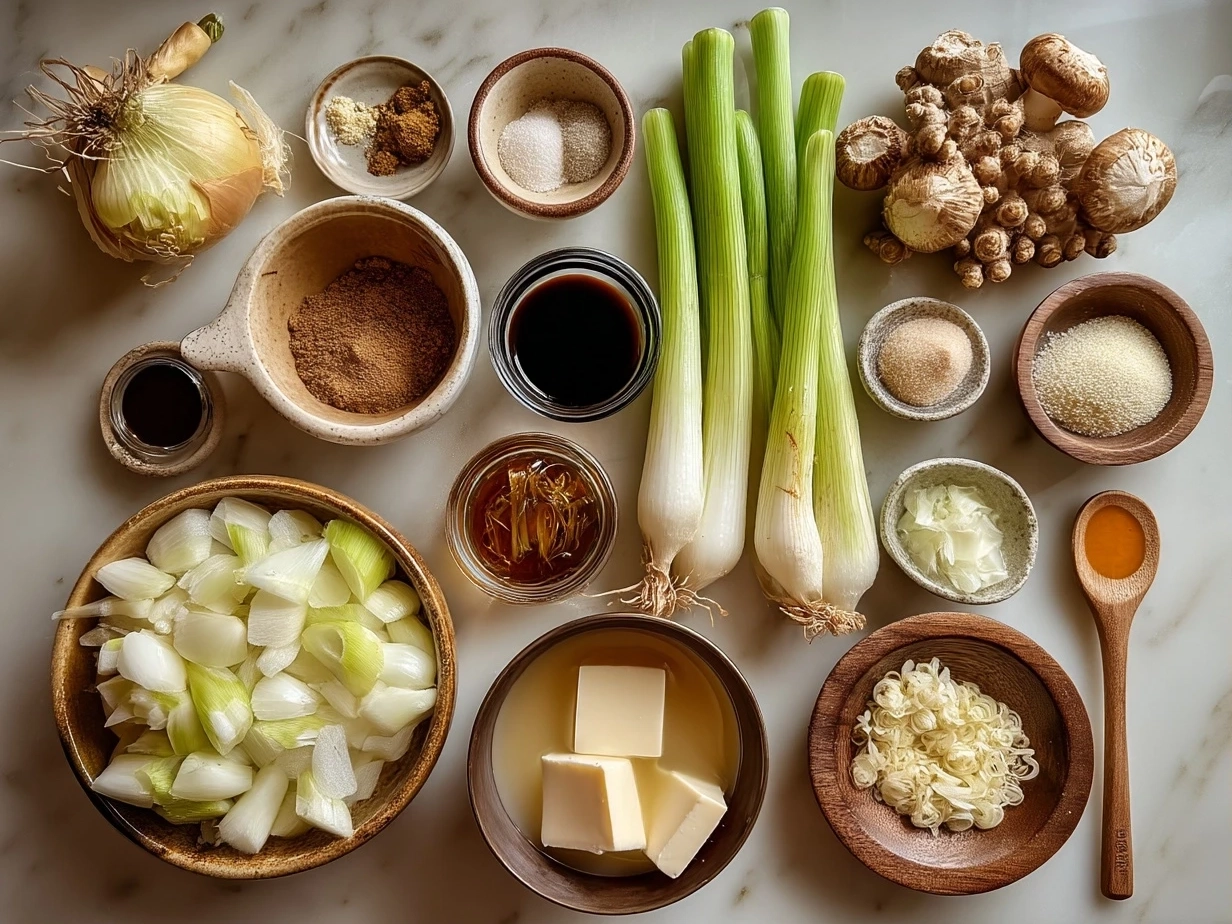
- 4 large sweet onions (about 2 pounds), thinly sliced I always use sweet onions for my Japanese Onion Soup—this is key because their natural sweetness becomes the soul of the dish. Shopping tip: You can find them at most grocery stores, especially in the produce section labeled as “Vidalia” or “Walla Walla” onions, or around spring for fresher options.
- 6 cups dashi broth (homemade or store-bought) For my dashi, I like to keep it traditional with kombu and bonito flakes, but you can use a quality instant dashi powder for a time-saver. If you want to see a deep dive into Japanese dashi broth onion soup stock, check out the interesting thread here.
- 3 tablespoons miso paste (white or yellow) This adds a lovely depth to the soup; I recommend adjusting the amount depending on your family’s taste buds. Miso onion soup recipe options vary, and I found that using white miso keeps flavors milder and more approachable for picky eaters.
- 1 tablespoon soy sauce For a gentle saltiness and umami boost. When I shop for soy sauce, I prefer the naturally brewed varieties — they’re richer in flavor and don’t overpower the soup.
- 2 tablespoons unsalted butter Butter is an important touch in my Japanese caramelized onion soup; it enhances the sweetness and gives that velvety mouthfeel I adore.
- 1 teaspoon sugar (optional) Sometimes I add a pinch of sugar if my onions aren’t quite as sweet as I’d like; it kicks the Japanese sweet onion soup style up a notch.
- 3 scallions/spring onions, chopped These are sprinkled on top at the end, lending freshness and a little crunch. I love how the Japanese soup with spring onions feels so simple yet elegant.
- Salt and pepper to taste Basics but essential.
Here’s a Japanese Onion Soup trick I learned from my mom: caramelize the onions in butter low and slow, and don’t rush this step—it’s what makes the flavor pop! For busy families, slicing onions ahead of time and storing them in the fridge can shave minutes off prep time on soup day. If you happen to have leftover caramelized onions (because yes, I always make extra), they freeze beautifully for up to 3 months, which means another batch of Japanese Onion Soup is never too far away.
For budget-wise shopping, buying dashi ingredients in bulk or even using a mixture of dashi powder and broth can make that rich Japanese dashi broth onion soup experience accessible to everyone. You can also find reasonably priced miso paste in Asian markets or even some mainstream supermarkets. Remember, good ingredients make a difference but don’t have to break the bank—this is a family meal through and through!
How to make – Step-by-step:
- Start with your onions: Heat a large pot over medium-low heat and add butter. Once melted, add the thinly sliced sweet onions. This is where patience pays off. Don’t rush—the onions should cook slowly, stirring every few minutes, so they start softening and turning that beautiful golden brown. Your kitchen will fill with the best aroma of Japanese caramelized onion soup—the smell alone makes this worth it!
- Caramelize onions carefully: This takes about 30-40 minutes. I learned the hard way with Japanese Onion Soup that if the heat is too high, the onions burn and become bitter instead of sweet and rich. If your stove runs hot, lower it, and stir often. You’ll know they’re ready when the onions are deeply golden and soft.
- Add dashi broth: Pour in the 6 cups of dashi broth. Bringing this to a gentle simmer combines the layers of flavor. The balance between the dashi’s oceanic depth and the sweet onions is what makes this Japanese dashi broth onion soup so special. While the soup simmers, you can prep any sides or clean up—something I often do as repairing my kitchen mess is part of my routine!
- Mix in miso: In a small bowl, ladle a bit of hot broth and whisk in the miso paste to dissolve it smoothly. Then stir this mixture back into the pot. Don’t boil the soup after adding miso to keep its delicate flavor and probiotics intact. This step is where your Japanese miso onion soup recipe shines with deep umami.
- Season and finish: Add soy sauce for a subtle salt kick, and adjust salt and pepper if needed. If you prefer a sweeter touch, a teaspoon of sugar blends beautifully here, completing that sought-after sweet onion soup Japanese style.
- Add spring onions last: Just before serving, sprinkle chopped spring onions into the hot soup. This little burst of green and mild sharpness is something I always find delightful—Japanese soup with spring onions feels fresh and vibrant.
- Serve hot and enjoy: Ladle your Japanese Onion Soup into warm bowls and maybe toast some crusty bread on the side. This soup usually takes about an hour from start to finish in my kitchen, but every minute is worth it for the flavors.
If you want some quick tips and extra fail-proof guidance on this recipe process, you can also find helpful discussion and advice on making clear onion soup variations at this lively group conversation on Facebook here, which helped me tweak my technique to perfection.
Serving:

My family absolutely adores this Japanese Onion Soup. The kids love it when I serve it alongside their favorite simple brown rice or as a light starter before dinner. For me, pairing the soup with homemade fried rice or something heartier feels just right — something like my savory onion beef fried rice always hits the spot.
This Japanese Onion Soup is perfect for those crisp fall evenings or even a quick lunch between busy days. I’ve also served it during casual dinner gatherings, and my friends always ask for this Japanese Onion Soup recipe to take home. A fun presentation tip? Serving it in little bowls garnished with extra spring onions and a drizzle of toasted sesame oil gives it a beautiful, restaurant-quality touch without turning your kitchen upside down.
If you have extras, this soup keeps well in the fridge for a few days. Reheat gently, and you can even add a splash of broth to refresh it. Leftover Japanese Onion Soup also makes a fantastic base for other meals like a Tuscan vegetable soup recipe inspired bowl or blended into a nourishing stew.
For seasonal variations, I’ve tried adding thinly sliced mushrooms or even tofu cubes for a heartier twist. Both worked wonderfully to complement the lovely caramelized flavors of the soup, enhancing that authentic Japanese caramelized onion soup vibe.
FAQs:
Q: Can I make Japanese Onion Soup without dashi broth?
Absolutely! While dashi gives the soup its signature umami flavor, chicken or vegetable broth can work too, especially if you’re in a pinch. You’ll lose a bit of that delicate flavor profile, but it’ll still be delicious. You know what I do when my pantry is light? I sometimes mix a small amount of instant dashi powder into regular broth to keep that Japanese dashi broth onion soup essence.
Q: What’s the best miso paste to use in this miso onion soup recipe?
I’ve tried white and yellow miso, and I lean toward white miso for a milder, sweeter flavor. If your family likes stronger flavors, darker miso is fine but start with less to avoid overpowering the soup. This adjustment came after a funny experiment where I added too much miso—lesson learned!
Q: How do I caramelize onions perfectly for Japanese caramelized onion soup?
Patience! Keep the heat low to medium-low and stir every now and then. Don’t rush this step; it usually takes about 30-40 minutes to achieve that deep golden color that makes the soup special. This is definitely one of those kitchen moments where slow and steady wins the race.
Q: Can I prepare Japanese soup with spring onions in advance?
You can slice the spring onions and store them chilled for up to two days, but add them just before serving to keep that fresh crunch. I’ve noticed adding them too early makes them soggy, and we miss that refreshing punch.
Q: Is this Japanese Onion Soup suitable for picky eaters?
Yes! The flavors are gentle but flavorful. My kids were hesitant at first but warmed up quickly, especially once I added a tiny bit of sugar to bring out the sweetness. If you want to sneak in more veggies, finely chopped carrots or mushrooms can blend in seamlessly.
Q: How to save time making Japanese Onion Soup on busy nights?
I always caramelize onions in advance and keep them frozen in portions. On a busy day, just heat the onions, add broth and miso, and you’re minutes away from dinner. Also, using instant dashi powder saves lots of prep time while keeping flavors intact.
Q: What’s the difference between this Japanese Onion Soup and typical French onion soup?
Great question! Japanese Onion Soup uses a lighter, clearer dashi broth base and often includes miso, making it umami-rich but less heavy than French onion soup with its caramelized crust and cheese topping. Both are delicious, but this version feels lighter and has a unique sweet undertone.
If you want to know more about making clear onion soups, a fantastic resource I found is the Reddit thread that dives into clear broth soups often found in hibachi restaurants, which enriches my understanding of Japanese Onion Soup traditions.
My Final Thoughts:
This Japanese Onion Soup recipe truly holds a special place in my heart—and my family’s! There’s just nothing like the cozy blend of sweet caramelized onions mingling with savory dashi and miso. I’ve shared this recipe countless times, and it’s become a staple in our kitchen, especially as a comforting go-to during cooler months or quick weekday dinners.
My Japanese Onion Soup Pro Tips:
- Take your time caramelizing those onions; slow cooking is key.
- Use quality dashi or a good instant powder for deep umami flavor with less fuss.
- Add spring onions right before serving to keep that fresh, crisp flavor pop.
Over the years, we’ve experimented with a few variations—sometimes swapping miso types, other times adding mushrooms or tofu for extra texture or heartiness. My kids prefer the basic sweet onion soup Japanese style version, while my husband loves it when I make it extra rich with a bit more butter and soy sauce. I think that’s the beauty of this soup; it molds itself to your kitchen’s rhythm and tastes.
If you try making Japanese Onion Soup your own, I hope you find the same comfort and joy my family and I have. It’s a humble dish with so much warmth, flavor, and love packed in each bowl. And if you ever want a little inspiration, check out some of my other favorite soups like this simple yet hearty crock pot lasagna soup or a vibrant Tuscan vegetable soup recipe that pairs beautifully with this onion soup as a starter.
Remember, cooking Japanese Onion Soup is as much about the moment as the meal—the smells, the flavors, and the people you share it with. So gather your ingredients, clear some time (or sneak in a shortcut or two), and make yourself a bowl of something genuinely delicious and soulful. You’re going to love it as much as I do.
Here’s to many cozy meals ahead!
Japanese Onion Soup

A comforting and savory Japanese Onion Soup featuring sweet caramelized onions and umami-rich dashi broth, perfect as a light appetizer or warming starter.
- Prep Time: 10 minutes
- Cook Time: 35 minutes
- Total Time: 45 minutes
- Yield: 4 servings
- Category: Dinner
- Method: Skillet
- Cuisine: Japanese
Ingredients
- 3 large onions, thinly sliced
- 4 cups dashi stock (Japanese soup stock)
- 1 tablespoon soy sauce
- 1 tablespoon mirin
- 1 teaspoon sugar
- 1 tablespoon vegetable oil
- Chopped green onions for garnish
- Optional: toasted bread or croutons
Instructions
- Heat vegetable oil in a large pot over medium heat.
- Add the sliced onions and cook slowly, stirring often, until they turn golden brown and caramelized (about 20-25 minutes).
- Sprinkle sugar over the onions and cook for another 2 minutes to enhance sweetness.
- Pour in the dashi stock and bring to a gentle simmer.
- Add soy sauce and mirin, stirring to combine.
- Simmer the soup for another 10 minutes to meld the flavors.
- Serve hot, garnished with chopped green onions and optional toasted bread or croutons.
Notes
For extra depth, add a small amount of miso paste just before serving, or top with a soft-boiled egg for a heartier option.